An Israeli document for use in France: what a notary can do, and what they cannot
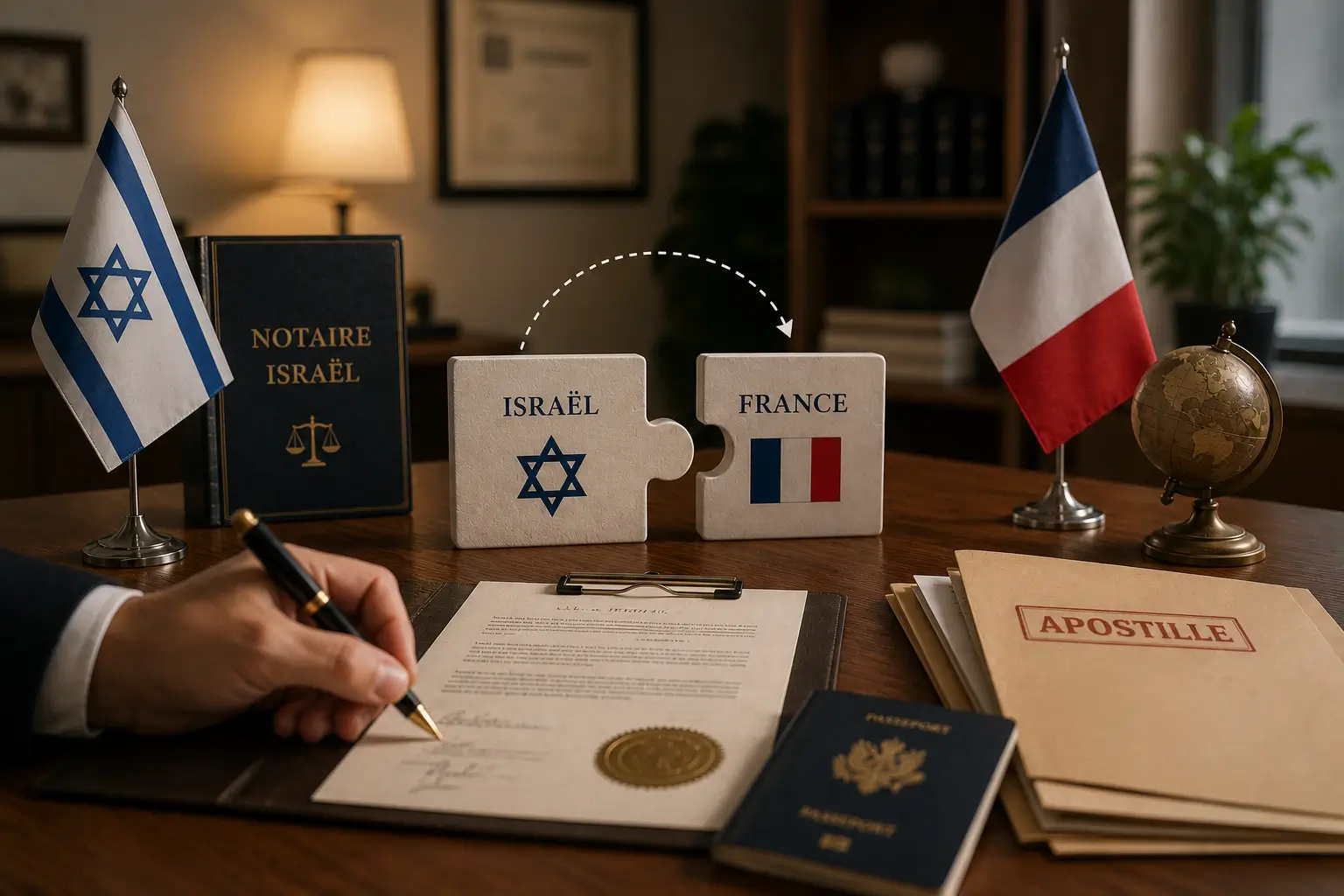
A power of attorney, a certificate, a deed intended for an administration, a bank or a notary in France: the question comes up often at the office, and the answer is rarely a single word.
An Israeli notary exercises functions defined by Israeli law. They may authenticate a signature, draw up or receive a power of attorney, prepare a notarial will, and certify the accuracy of a translation where they command both languages. What they cannot do is guarantee that a foreign body will accept the document. That acceptance depends on the receiving authority and its own requirements.
Three things to check before the deed is drawn up
The apostille. Israel and France are both parties to the 1961 Hague Convention. An Israeli notarial act intended for France will generally need an apostille, issued in Israel, certifying the capacity of the signatory. Without it the document is often refused.
The translation. A document in Hebrew will usually need to be accompanied by a French translation, in a form that varies according to the receiving body.
The content. A power of attorney must set out the powers granted with precision. Too general, and it is frequently rejected; too narrow, and it will not cover the transaction.
The useful habit is a simple one: ask the receiving body in advance exactly what it expects, and have the deed drawn up accordingly. That is what we do on the files we handle.
This is general information, not legal advice, and reading it creates no lawyer-client relationship. Requirements vary with the receiving authority: talk to us about your document.